Wednesday, 30 November 2022

Best Christmas video 2022 - Midnight Collective

Christmas 2022


Despite our relative silence over the last three years we are still getting lots of interest in the back story of what happened to our rare dunelake during the construction of a local expressway. This area has changed radically and though there is now a replanted 'swamp' that looks back to the time when there used to be one here, our wild wetland birds haven't returned. 

There has been a marked decrease in these populations in the wider area -of scaup, dabchick, teal and even mallard and very little nesting going on despite the big increase in reserve cover for this to happen. We aren't sure why this is  but probably due to a number of factors - including the opening up of the area to human (and dog) access and the proximity of the expressway.

We are still very active down here but necessarily keeping a low profile as we monitor the reviving wetland ngahere (forest) and bring in a wider variety of our duneland swamp  plants that weren't part of the original plantings. One of the pleasures has been to see the increasing self seeding of native trees and then after five years - the first nests of fantail and waxeye in the spring. We are also seeing tui who seem to be building in the area.

But there are big problems on the horizon. There's little point in replanting native areas unless they are properly managed long term and the increase in willows in this wetland will drain it in the long term. These were cut back once only - but this was a folly because it simply spreads the willow. They need to be poisoned and the area is now essentially left untended, (except where people start complaining about overgrown pathways making life difficult for their e-bikes!!!!). So it is reverting back into a weeded up area. 

But all is not lost because we are also seeing a build up of insect life. Spiders in particular, but also dragon fly and stick insects. One youthful stick insect attached itself to a back pack and had to be walked all the way back from the car!!!

We've posted WHAM on our Xmas video and why not? Some songs just get better and better...

Environmental artist Frances Jill Studd 
francesjillstudd.blogspot.co.nz 

Contact us...
vantoohey@gmail.com


Monday, 13 December 2021

The Best Christmas Video Ever – from Billy T.

 Midnight Collective 

Working for our wetland birds

Welcome to our Christmas video for 2021. 


We couldn’t resist our tūī’s again this year which have been ever increasing in numbers. They move around a lot and are bolstered by Kapiti Island residents flying over.


But what a trial of a year for everyone though we’re nearly through it now and things looking more promising for the year to come. Everywhere on these islands starting to loosen up, though not without misgivings, because that could change pretty quickly.

We are sending out a big tēnā kōrua (thankyou) to our visitors who are continuing to check us out. We aren’t posting regularly and this is deliberate for we are continuing to work down here. 

Despite the dunelake beginning to reform, our waterbirds haven’t returned. We have seen one duckling brood emerge (there used to be 8-10) who Mum pretty quickly pulled out of the area. Then only one pukeko chick which is surprising. 

Pukeko’s rule this roost, but they have become very wary and we think it’s probably because the previous barriers of fence and blackberry have gone. This is allowing dogs to roam more freely through the area and while most owners are really good, it only takes one…

The good news is that we now have a significant native wetland understory maturing in the area, but there’s willow, poplar and macrocarpa seeding up through it and these will take over now the NZTA weeding programme has finished. Our focus has shifted from  birds to vegetation. So we are hard at work trying to control these infestations.

The NZTA plantings are limited to 5 or 6 undergrowth species and concentrated in areas where the public are plentiful so we are busy trying to build our wonderful Kiwi species variety back into it, hence our reluctance to go public (a contractor mowed down five kahikatea seedlings another NZTA contractor had planted but what can you do!!!)

So it’s one day at a time with the big news this year being a piwakawaka nest (fantail) established in one of our  new plantings… This is such a delight and augurs well for the future.


And the voice of today? Has to be Billy T. of course. Can you pick the te reo Māori verse?

Meri Kirihemete


Wednesday, 8 December 2021

Aftermath of the Kapiti flooding


 Midnight Collective

Working for our wetland birds

Here are some new pictures from two days after one of our largest rain storms with the Wharemauku now subsiding but still topping banks 48 hours later.

We’ve been checking with other rain gaugers, (a stalwart breed)  and all agree with around 180-200mm falling over the two days. But our luck held out with the flooding. The rain eased off around 4ish at 120mm, but then we got another fifty overnight which kept the Wharemauku overtopping its banks for 48 hours. This is unprecedented but the flood plain seems to have done its job in limiting the damage between town and the sea.

Here is the diverted channel of Wharemauku after the flood.

Each flood is unpredictably different and here the serous issues developed at the north end of Raumati Beach where the creek began flooding behind the stopbank. 

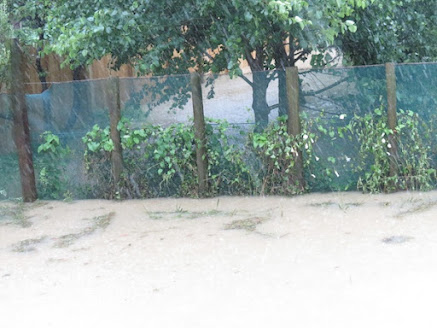
It poured into the back gardens, threatening the houses while back-lifting these drain grills in the street right out.

But quick action by a local with a pump, then Council support prevented the flood from inundating any residences.

 This the worst effected, now clear. Then they’re out this morning repairing damage to the walkway.

These pictures from further down look bad, but here too the water levels stayed below the houses.


Up rooted tree

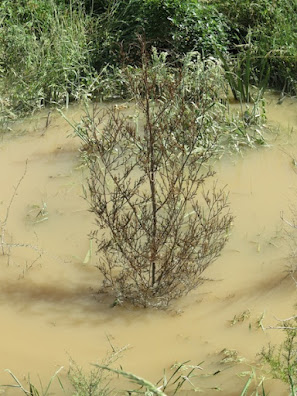
The flood levels rose 6 to 7 feet within the floodplain itself. We haven’t seen a lot of pukeko this year, only one chick, but there will be nests and these would have been flooded out. 

The wetland ngahere (forest)wasn’t immune either...

This is the floodplain at its peak and these shots below, show the impact on youthful trees.

ti kouka (cabbage tree)…

saltmarsh houheria (lacebark)…

Kahikatea. 8 feet tall, so that’s only half of it…

They’re all reasonably ok with wet feet so long as it doesn’t hang around too long. It’s curious about ti kouka which is usually found thriving under dry conditions, but they’re water resilient too, so here’s hoping…

Track for today? 

We’re feasting upon Judy Garland and here is her Christmas anthem—Have yourself a Merry LittleChristmas… Too forlorn for Christmas you think? Well its the Xmas song from 1944 so understandable, as Judy raises the bar on melancholy to transcendental levels. (Emily Dickinson can do this too…with words)  But keep a watch out for our Xmas video – coming to you soon… (free to air).

Ngā mihinui


Sunday, 5 December 2021

Breaking news -Major flooding developing at Kapiti NZ -

Midnight Collective 

Working for our wetland birds...

We’ve had 120 mm of rain here over the last 12 hours and it's not looking like its going to stop there, as our local creek, the Wharemauku has begun to climb up into uncharted territory. It is now testing the Kapiti expressways flood plain design which is coming under serious stress…

3 hours ago it looked like it was coping. The Wharemauku had topped its banks and diverted into the flood plain. By 2.30 however the plain was full and the creek had begun pouring back into its old channel and beginning a dramatic rise. Back filling was also occurring, beginning to close roads in the centre of town. This hadn’t happened during the previous big flood, so is the expressway responsible?  This is the town flooding close to Wharemauku drain subsidiaries.

The major trouble (so far) is down stream, and here is the Wharemauku as it emerges from under the expressway bridge. It has done a right angle turn and is now pitching directly into the flood plain middle distance (south).

 That’s the bridge top left, while below is the creek that has now come out from the other end of the flood plain, 200 metres down stream. It is following the walkway. This was well contained at lunchtime, but it isn’t mucking around. It was too deep and swift to walk across at 2.30pm.

Above is the new creek streaming back into its old channel and below is the view downstream from there…. It has swallowed the walkway and is climbing the stop banks.

But the big problem is in the residential areas down stream where the last major flooding occurred after a similar amount of rain. These images show the water starting to rise again here.


As you can see we  are sitting on a knife edge down here though the rain is finally starting to ease up (4.05pm) and we're starting to see our hills again. Still it is usually an hour after it stops that the creek finally stops rising...   

Here's hoping everyone is keeping safe and dry... Kia kaha and

Ngā mihinui to you all


Midnight Collective


Wednesday, 9 December 2020

Midnight Collective Xmas video 2020

Welcome to the Midnight Collective Broadsheet 172 

Actively supporting NZ’s endangered wetland birds

Wouldn't be Christmas without the Midnight Collective Xmas video. Our national bird may be the Kakapo but our most ubiquitous and rapidly repopulating (in this area) favorite is the tui. Here is ours feasting on an Australian bottlebrush which comes into flower just as our kowhai finish. This tui knows and has been bringing back her progeny so we usually have 4 or 5 now squabbling over access. 


This is to wish everyone the best of the season and to hope that the new year will usher in a safer, greener more peaceful world for us all.

Environmental artist Frances Jill Studd francesjillstudd.blogspot.co.nz 

Contact us...
vantoohey@gmail.com


Thursday, 3 December 2020

How do bees manage windy conditions on New Zealand pōhutukawa flowers


Welcome to the Midnight Collective Broadsheet 171 

Actively supporting NZ’s endangered wetland birds

Here is a short note puzzling over something we’ve observed around bees at this time of year (our early summer) as our Christmas tree (pōhutukawa) begins to flower. And pictures to go with it!!!  


Maybe you've seen this too...

Should you watch honey bees in mildly breezy air, hanging around pōhutukawa in bloom you might see something strange. It’s complex work as they steer around the red spiked blooms before selecting a section of flower to negotiate. Here they pause in midair to concentrate on entering the needle tendrils. The entry doesn’t seem hazardous to us but they behave as if it is, holding tight before nipping in and levering down to the nectar. If the breeze suddenly picks up and sways the flower away before she gets her grip on it, something remarkable happens. Stationed like a drone, she doesn’t back off and wait for the wind to settle, she sways around, keeping in precise position above the same spot. This response is so perfectly orchestrated that she can’t be thinking it. An automated flight system, outside her personal volition, must be operating to keep her hovering so perfectly in position while swaying erratically in the wind.

This raises two baffling questions concerning the operation and its speed. What exactly is this automated system responding to? Does it have a visual fix on the flower’s wayward motion and adjust the flight to compensate, or is it direction finding against the wind; shifting co-ordinates with the breeze. Perhaps a combination of the two? But then, what kind of mechanism could work at this speed? We don’t have answers for this but given her size, what we can say is that this is seriously sophisticated neuro-organisation.

All the while she appears to be thinking about where and when to enter her flower. So there also seems to be mindful decision-making going on and this is what I’m probing toward -  Does she have a mind? Well, possibly. How then, does it work? Is it anything like ours? This guidance system seems to lend credence to a machine-mode model, but does it? We too have automated systems, that you can test out for yourself. Which pocket do you put your car keys in? I transfer mine to the left but didn’t realize this until I watched myself doing it. But it’s tricky. Immediately you ‘know’ you’re looking, a switch comes on. Your behaviour becomes directed. You can see this in birds too. A spoonbill circling a wetland checks out safety and suitability while keeping her flight path perfectly balanced between preparing to land and abort.

I don’t have an aerial modulating ability quite so startling as this bee, but such a sophisticated system lends credence to an opposite view. It frees the bee up to continue making judgments about keeping safe and where to gather food, and this seems obvious as she zips between entry points. Sometimes she’ll make a mistake with a barren lode, which indicates she can’t always ‘see’ exactly what she’s scrambling into, but on gaining ‘understanding’, she immediately flares out again.

The quality, nature and savoir faire of her mind and its decision-making process is likely to remain outside our ken, but not our speculation. So are we dealing here with levels of consciousness we are yet to think plausible? And is this the same with other animals?


Finally  here's a local song to cheer all our Covid-risk punters along. We are contained down here in our Te Moana-nui a Kiwa (South Pacific) stronghold but not relaxed or taking ourselves fore granted  with all the grim news coming from your neck of the woods. Kia Kaha to all youse (Stay Strong!!!) and arohanui (love to you all) This song  Hoki Mai - from Willie Mathews quartet featuring Morvin and Kura Simon will cheers you along... (Go Kaiwhaiki!!!)

Environmental artist Frances Jill Studd's blog...  francesjillstudd,blogspot.co.nz

Contact us at 

vantoohey@gmail.com


Friday, 27 December 2019

Midnight Collective New Year video - 2020


Welcome to the Midnight Collective Broadsheet 170
Actively supporting NZ’s endangered wetland birds

Here we are back again, with a post Xmas video because we've scooped new film of our native piwakawaka/fantail fledging.   You never see this, and even when you are lucky enough to catch them, they move so irascibly that you can’t bring them into focus or catch them sitting still. This film isn’t perfect, but was taken at the wrong end of dusk, so bear with us…  So much bad news these days - here’s some good…  Then further musing below 


 A note on the film.
These chicks came out onto the branch in the late evening, settling in that peculiar jigging dance so Ko saw straight off they weren’t waxeyes or riroriro but piwakawaka—fantail chicks who could barely fly. They must have just got out of the nest, though as mum and dad came in with their evening tucker – they gained in confidence and would zip off after them. Then settle back in obvious exhilaration onto the branch where, for 30 odd seconds, finally, we got the video. Here we discovered they weren’t black and grey and white like their parents, but warm breasted red, set  aglow in that failing light. Then for time it wasn’t as if we had stopped breathing, it had no longer become necessary.

Track we were listening to while posting this – well – here’s a little note all about that… sent in by the IT himself.

I’m surprised now, at how chorally arranged the M&Ps were. This was the first Cali sound we could tolerate – having dissed the earlier stuff which was all about surfing. But there’s a joyful anarchy running through these early ‘66/7 days -honky tonk mixing it with  Motown – then flute and organ running away on everything else which fed off into the Doors before  Jim Morrison lead them out into the dark. M&Ps would have been a piano bar band without Cass, is my affirmed opinion, but there’s real chemistry here and four or five tracks that still tilt the world on its axis - Creeque Alley, amongst them. ebw I.T.


When Cass was a sophomore, planned to go to Swarthmore
But she changed her mind one day
Standin' on the turnpike, thumb out to hitchhike
"Take me to New York right away"
When Denny met Cass he gave her love bumps
Called John and Zal and that was the Mugwumps
McGuinn and McGuire couldn't get no higher
But that's what they were aimin' at
And no one's gettin' fat except Mama Cass