Sunday, 28 October 2018

Where have all the waterbirds gone? Wetland blues at a New Zealand dunelake


Welcome to the Midnight Collective Broadsheet 161
Actively supporting NZ’s endangered wetland birds
We used to have a dune lake here at Raumati Beach on the Kapiti Coast and here are some images from before its destruction.   These are from late October 2012 – 6 years ago now
Dunelake Oct 2012 
This gives an idea of the size of the lake which was 5-7 hectares,  a key factor in attracting such a variety of wetland birds. This has reduced to two small ponds in a large flood plain and the birds have abandoned the area. In this foto you can see pukeko with their chicks, a pied stilt pair and a lone mallard. Three or four pair of pied stilts usually called this home in spring/summer with two or more nests set. They would return in August but we haven’t seen any for 18 months now. Close proximity to the expressway may be a factor.
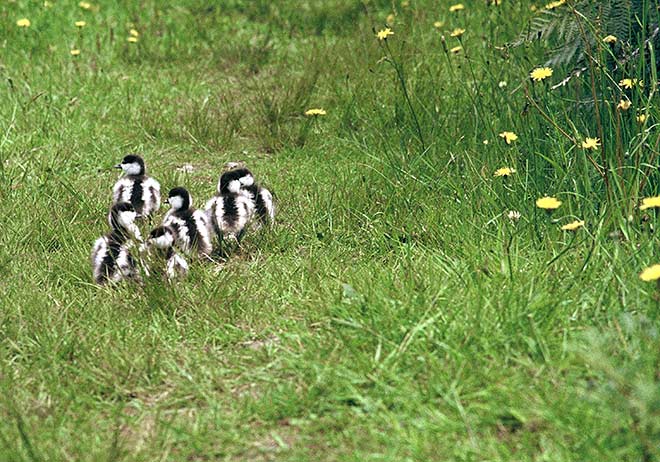
Putangitangi - Paradise Duck pair Oct 2012
Two pair bred in 2016 and we counted around 60 youngsters flocking the following autumn, before the powers-that-be, in their wisdom,  drained the back area. We’ve seen nothing of these birds for a while now.
Mallard mum with chicks Oct 2012
There were usually 6-8 mallard nests in this area but only one sighting of ducklings here so far. This dunelake hosted over 50 birds with up to 15 different species on the lake. During a walk this morning we saw two mallard pairs then this lone male shoveller on one of the ponds.
Male shoveller
He looks like a youngster from last year and seemed a little lost so may be hanging around with his partner on her nest close by.

What we did see however were plenty of these…
Pukeko
Pukeko now have a clear run on this much extended flood plain. They usually scatter if disturbed because there's plenty of dogs come down the path, but this time of the year put up a fight which means there’s a nest nearby. One small feisty male charged straight at us before backing off. Pukeko are a top predator here and take any (and all) local chicks to feed to their own young. This is why they are culled from around our endangered species, like their cousins the critically endangered takahe (300 survivors). So even if there are other species nesting here, the youngsters probably won’t survive unless their canny mothers can get them into the relative safety of the Wharemauku creek.

There are more positive developments however with the native plantings and then the opening up of the area to marine life from the Wharemauku. The plantings are designed for beautification and noise reduction using a limited number of species. And these are planted  regimentally. Still it's better than nothing and some areas away from public view are thriving.
Kiekie left with native rushes flax and occasional toetoe
Understory shrubs
There’s manuka in full white flower, mixed with a limited variety of understory. The idea is for these shrubs to establish and ‘shade out’ the weeds beneath, but its not working yet as you can see from these fotos, where the weeds are beginning to win.

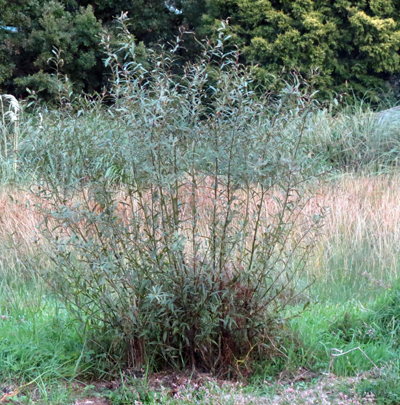
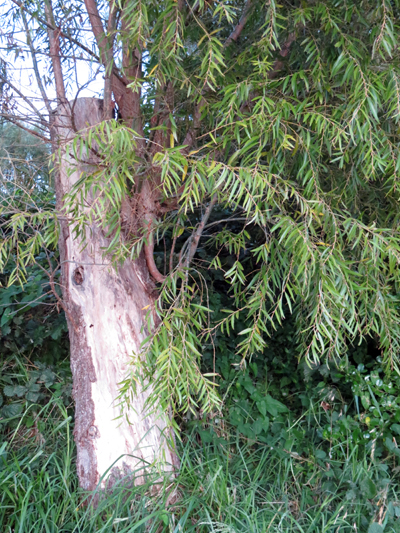
And then there’s willow that will destroy this area if it isn’t taken out soon.
Willow begin to run...
What is missing from this replanting is any clear understanding that this is a duneland swamp forest. It would have originally contained large forest trees including totara and kahikatea (the stumps were dug out of the swamp on excavation) then hardy duneland plants and shrubs, including orchids and gentians. Here’s one duneland plant that could have been used to help smother the rampant weed growth.
Native spinach
This is a colony of native spinach established 4km away at the Waikanae estuary. (Cook used this plant to combat scurvy in his crew). Other hardy native duneland species would survive the severe coastal summers that killed off or stunted, some of the leafier native species last year. It is a wetter spring so far this year and many of the plantings are showing the benefit of that – though the coming summer will still be a test for even the more established shrubs…

But here’s a positive foto to end with. 

This white faced heron has been regularly reported down at the southern end of the flood plain over the last few months. She's  drying off on the drain railing -way to close to the expressway for our liking – but she seems to find plenty to eat down this end.

Track we were listening to while posting this? We’ve given it all over to Amy Winehouse – how difficult it is to listen to this stuff now!  What gifts –  lost to this world; but then you hear that plaintive voice evoking Carol King at her most bitter sweet -  Tonight you're mine, completely... and she's back amongst  with  Carole King at their most bittersweet. Yes we sure will, be loving you tomorrow…


Wednesday, 26 September 2018

Critically endangered New Zealand grey ducks spotted at Kapiti.


Welcome to the Midnight Collective Broadsheet 160
Actively supporting NZ’s endangered wetland birds
Pārera -NZ Grey Duck 
We got out early this morning, after a turbulent southerly had swept through in the passed couple of days, and to our great surprise spotted these two Pārera ducks pretty much straight away.

They aren’t near the expressway which has (at least for the moment) lost the rich community of native bird life that used to be here; but we’re keeping the location Mum – because there’s a chance these two might be nesting. 
The female was leading the way into the undergrowth, with a bemused male tagging along behind. They appear to be young birds and are fit and healthy, but the females are notoriously dilatory in selecting a nesting site, so she may very well clear out again.
Telltale green colour under wing
The story of why this duck is critically endangered has been told here before. Mallards were originally introduced from the UK, but this was stopped when they were found to interbreed with the native duck. There were originally large colonies of pārera in this area. There are records of up to 20,000 out on the strait between here and the island (Kapiti) in the 1920’s but these had been shot out by the early 1930’s and intensive lobbying of the Government allowed the wholesale introduction of US mallards. 30,000 were eventually released. These birds can migrate to Australia and the Pacific Islands so what was a local catastrophe has become a regional one.

This migration probably explains the origins of these two. We have seen pārera here before though not recently, so it’s a great pleasure to welcome these two back…
Here is a short film we made of the two disappearing up into the scrub near here.

 
Track we were listening to while posting this – Well, we blew our cover last week with Patti Page so we’re going for broke today with Slim Whitman and this pearler from 1954  Rose Marie –
 Oh Rose Marie, I love you

I´m always dreaming of you
No matter what I do, I can't forget you
Sometimes I wish that I never met you
And yet, if I should lose you
Would mean my very life to me
Of all the queens that ever lived, I choose you
To rule me, my Rose Marie

You just don’t get voices like this any more; husky and yet girlish and effortlessly sincere, with a falsetto that takes you out into the stratosphere without ever sounding forced or strange. What a range! How did he hit those notes and where have voices like this gone to?


Thursday, 20 September 2018

Spring comes to New Zealand wetlands – Raumati Beach


Welcome to the Midnight Collective Broadsheet 159
Actively supporting NZ’s endangered wetland birds

Black Swan - white cygnet 

We couldn’t resist putting up this suite of images after a quick tour round the district on a rare spring morning. Sadly our former dunelake is now devoid of its rich wetland community and the area in general, yet to recover from the onslaught of the expressway. But there’s still plenty to see should you know where to look.
Pride of place goes to our favourite the dabchick. It’s hard to pick these tiny grebes up because they’re underwater mostly and in the raupo, but we spotted three pair all within the town belt…and then another two pair about 5km south of here. We’ve been concerned with the recent arrival of the aggressive Australian coot but these little guys seem to be holding their own.

Spring is really busting out with this family of black swans that came out onto a pond in the town centre about a week ago. The dad makes sure you don’t get too close.

Can you spot the kotare (kingfisher) in this fuzzy shot from half a kilometre away. He was busy fishing in the Ratanui wetland system. Couldn’t see a mate so perhaps she’s already on her nest…
These quail aren’t natives but after not spotting any for a good five years we now have a colony of 15 or so, in the blackberry behind the airport.

The sign that spring is really under way is the kowhai breaking out. They’re rich with nectar and there’s a little Australasian waxeye in the bottom one, getting tanked up on liqueur.

The shovelers are back in force at Ratanui and elsewhere this year and here’s a male all alone. His mate will be on a nest because the males hang around looking deeply puzzled about what’s going on – then sometimes give the nest away.
And then there's these two - Grey Teal top and fed up looking male scaup - taking a morning kip and woken by our intrusion. 

Finally a lone pukeko,


This one is in the centre of town and here the gender roles  reverse. This looks like the matriarch of up to a dozen birds and she's out foraging having left her males  on duty, sitting on the eggs. Pukeko are a very mixed blessing  this time of year, because they raid the nests of rarer species like parera and pied stilt.


Track we were listening to while posting this was Patti Page (Yes....I'm afraid it was) something American to come out in sympathy for all the tripe you've been going through  over the last two or so years… Allegheny Moon…(now that it's coming on to the first full moon of spring…)
Allegheny Moon your silver beams
Can lead the way to golden dreams


Sunday, 15 July 2018

Rare whale in Wellington Harbour NZ

Welcome to the Midnight Collective Broadsheet 158
Actively supporting NZ’s endangered wetland birds


The story dominating local news over the past fortnight has been the arrival and frolicking sojourn in Wellington Harbour of a rare southern right whale. First spotted on July 3rd, by a passenger on a commuter train (9am), it has been identified by DoC as a southern right. NIWA has also confirmed the recording of sounds by the species locally. 

These whales appear to be making a comeback, two centuries after being hunted to extinction along these coasts and s/he (no-ones been able to spot the gender!!) got the timing  right with the advent of the Maori new Year -Matariki. Maori have indicated it as a positive portent for the coming year. The animal has become a treasured celebrity and many have adopted the name Matariki for it. 

Warmer sea temperatures have also been seen as a reason for this close encounter though another factor must surely be the plentiful food supply in the harbour where the whale has been observed feeding. So its a sign of a harbour in good health.


The annual Matariki fireworks display was delayed a week for fear of spooking the whale, but when it was seen leaving the harbour on Wednesday (11th July) and the fireworks finally took place Saturday.      

Thanks to Dom Post and Victor Huang, NZ Herald RNZ et al for story and pictures.

ps
This isn't the first right whale to be seen in the harbour however. Another vistor arrived in early October 1997. Thats 20 years ago...
Environmental artist Jill Studd's blog
Contact Us

Sunday, 13 May 2018

The Killing Season


Welcome to the Midnight Collective Broadsheet 157
Actively supporting NZ’s endangered wetland birds

Duck shooting is upon us once more and being celebrated in the media, but not here, where we register our disgust and disquiet at the way human beings have treated and continue to treat animals.
1920's - killing on this scale of the native parera duck lead to the
introduction of mallards from the US which interbred with the
native duck which is now critically endangered.
Following is a vivid account of what it means to be a wetland bird  at a dunelake about 15 kms north of here at the present moment. It is especially relevant now the expressway has destroyed our Raumati Beach dunelake and the rich native waterbird life that used to live here.
Critically endangered Parera 
Mallard Parera hybrid (orange legs) 
Mallard pair

Duck shooting opening day in Te Hapua Rd is a cacophony of barking dogs, neighing horses, squawking pukekos and shot gun explosions. Ducks drop onto the surrounding properties, some maimed and flailing and all birdlife makes an exodus of flight and fear.

The first weekend of duckshooting is frenetically embraced by ‘commando looking’ fancy dress individuals. They sit in the dark in camouflaged mai-mais waiting for the dawn assault.

The ducks don’t have calendars for this onslaught which can only be described as wetland terrorism. The result is that all pond and swamp wildlife disappears along with the ducks. The frogs (a feature of Te Hapua and declining worldwide) have habitats disrupted as the guys and dogs trawl the landscape to pick up shot ducks.
Around 6% of these protected Grey Teal are shot during the killing season.
The Te Hapua Wetland is one of 3 percent of coastal wetlands left in NZ. Several properties share part of it. 90% of owners have placed QEII Open Space covenants on their portion. All have embraced wetland restoration to encourage the conservation of wildlife reliant on wetland habitats for survival.
Diving underwater doesn't stop these scaup from being shot at by triger happy New Zealanders.  
I am appalled at this antithesis of the majority aims of conserving and protecting our unique environment. Duck shooting is cruel and totally inappropriate in the Te Hapua environment and should be banned throughout NZ. 

There is a astonishment over here at the extreme behaviour of Americans with their NRA and their firearms fetish; but are we any different? We don’t think so.
Paradise Ducks are also among the victims.
This of course, is simply one arm of the human onslaught upon animal lives. A book that recounts the awakening of one scientist to what he was doing to animals in his own lab in using the scientific method to progress his own career, is John Gluck’s - Voracious Science and Vulnerable Animals: A Primate Scientist’s Ethical Journey.  There is something desperately wrong with a scientific imagination that can divorce itself so readily from the suffering it is inflicting, so please be warned, this is not a feel-good read. And yet, even should they stop inflicting harm on these ‘higher’ animals, that still leaves the rest of the animal kingdom for them to eviserate.

Track we were listening too while posting this  was the shrill, peppery, irresistibly persuasive voice of Melanie Safka - Lay Down  
Some came to sing
Some came to pray
Some came to keep
the dark away


Sunday, 8 April 2018

NZ Wetland to Weedland - How noxious willow weed took over our destroyed dunelake


Welcome to the Midnight Collective Broadsheet 156
Actively supporting NZ’s endangered wetland birds
Up and away - willow in the wetland
Over the past few months willow saplings have gone forth and multiplied down on the western side of the M2PP  expressway near the Wharemauku stream. This is a noxious weed that was previously unknown in the area so how did it get in here and can it be contained? 

Don't believe that its noxious? - This is taken from the DoC website
Willow – the scourge of wetlands 
More than 90% of New Zealand wetlands have been 
drained. Crack and grey willow are a scourge in most 
of those that remain, shading out native plant species, 
choking water bodies and even ‘pumping’ wetlands 
dry through their leaves. This leads to a loss of plant 
diversity, a lack of open waterways and the drying of 
wetlands that affects the birds, fish and insects that rely 
on them.

An abundance of seedlings 
There are four likely sources. The first is wind blown and an occasional poplar seedling coming through can be traced to a poplar stand bordering the swamp. There are however no similar stands of willow close to this area, so we can rule that out.

The second source is flooding. The area has been opened up and drained, but is regularly inundated now from both sides. 
Flooding in willow infested area...poplar stand in background

This is the traditional source of willow weeds. However both sides of the expressway get flooded but only the western swamp is infested. There are a few seedlings on the town side, but some of these are above the flood line. 
Willow growing out of planting above flood line
Flooding will be a source, but it can’t account for the level of infestation we are seeing, especially in the south western zone.

This leaves two prime suspects.

New weeds have been appearing here since the work on the M2PP was completed a year ago and some of these are garden botanical specimens like this sweet pea.
Pretty in pink - a sweet pea amongst the willows
These garden plants and the occasional willow, can be spotted growing up through some of the native plantings potted soil, so the nursery stock is one source of contamination.
Spot the willows
The primary source however must be in contaminated topsoil trucked into the area by NZTA contractors. This fits with the spread of the seedlings which are clumped together in blocks along the cycle way and then along the south eastern end. 
Willow felled and ringbarked at back of  airport - now regenerating
This infestation is very pernicious and will turn what should be a regenerating native swamp area, into a drained willow forest, if it isn’t stopped now.  But how likely is that? 

There are gangs around trying to keep on top of the runaway weed proliferation but when I approached one, they were working to clear areas around the native seedlings to give them breathing space. The theory is that the native plantings will grow in size to smoother the weeds, so they weren’t pulling weeds. They were  working right next to a growing sea of willow seedlings, but were completely unaware of the issue. 

So who will clean this up? 

Well, the NZTA is still in charge but are way too busy putting up signage to show what a great job they have done to take an interest. Besides there are only a couple of years left in the weeding contract, at which point it will presumably devolve back under District and Regional Council jurisdiction. But their scientists don’t get out in the field much anymore. It’s too far away from head office, the lab, and the coffee machine so they keep an eye on things via google maps and Wikipedia. Meanwhile the land itself appears to have been contracted out to a contractor charged with contracting out the contract to a contractor. And his name? Mr Nobody. 

Track we were listening to while posting this? We are back to John Lennon and his plaintive Bob Dylan influenced Nowhere Man
He's as blind as he can be
Just sees what he wants to see
Nowhere man, can you see me at all
Nowhere man don't worry
Take your time, don't hurry
Leave it all till somebody else