Sunday, 5 December 2021

Breaking news -Major flooding developing at Kapiti NZ -

Midnight Collective 

Working for our wetland birds...

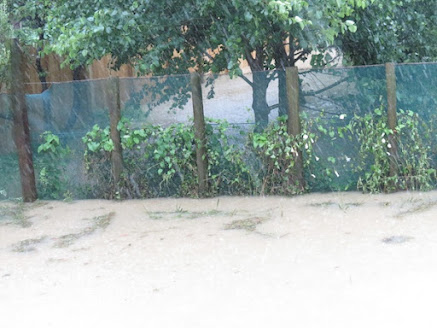
We’ve had 120 mm of rain here over the last 12 hours and it's not looking like its going to stop there, as our local creek, the Wharemauku has begun to climb up into uncharted territory. It is now testing the Kapiti expressways flood plain design which is coming under serious stress…

3 hours ago it looked like it was coping. The Wharemauku had topped its banks and diverted into the flood plain. By 2.30 however the plain was full and the creek had begun pouring back into its old channel and beginning a dramatic rise. Back filling was also occurring, beginning to close roads in the centre of town. This hadn’t happened during the previous big flood, so is the expressway responsible?  This is the town flooding close to Wharemauku drain subsidiaries.

The major trouble (so far) is down stream, and here is the Wharemauku as it emerges from under the expressway bridge. It has done a right angle turn and is now pitching directly into the flood plain middle distance (south).

 That’s the bridge top left, while below is the creek that has now come out from the other end of the flood plain, 200 metres down stream. It is following the walkway. This was well contained at lunchtime, but it isn’t mucking around. It was too deep and swift to walk across at 2.30pm.

Above is the new creek streaming back into its old channel and below is the view downstream from there…. It has swallowed the walkway and is climbing the stop banks.

But the big problem is in the residential areas down stream where the last major flooding occurred after a similar amount of rain. These images show the water starting to rise again here.


As you can see we  are sitting on a knife edge down here though the rain is finally starting to ease up (4.05pm) and we're starting to see our hills again. Still it is usually an hour after it stops that the creek finally stops rising...   

Here's hoping everyone is keeping safe and dry... Kia kaha and

Ngā mihinui to you all


Midnight Collective


Wednesday, 9 December 2020

Midnight Collective Xmas video 2020

Welcome to the Midnight Collective Broadsheet 172 

Actively supporting NZ’s endangered wetland birds

Wouldn't be Christmas without the Midnight Collective Xmas video. Our national bird may be the Kakapo but our most ubiquitous and rapidly repopulating (in this area) favorite is the tui. Here is ours feasting on an Australian bottlebrush which comes into flower just as our kowhai finish. This tui knows and has been bringing back her progeny so we usually have 4 or 5 now squabbling over access. 


This is to wish everyone the best of the season and to hope that the new year will usher in a safer, greener more peaceful world for us all.

Environmental artist Frances Jill Studd francesjillstudd.blogspot.co.nz 

Contact us...
vantoohey@gmail.com


Thursday, 3 December 2020

How do bees manage windy conditions on New Zealand pōhutukawa flowers


Welcome to the Midnight Collective Broadsheet 171 

Actively supporting NZ’s endangered wetland birds

Here is a short note puzzling over something we’ve observed around bees at this time of year (our early summer) as our Christmas tree (pōhutukawa) begins to flower. And pictures to go with it!!!  


Maybe you've seen this too...

Should you watch honey bees in mildly breezy air, hanging around pōhutukawa in bloom you might see something strange. It’s complex work as they steer around the red spiked blooms before selecting a section of flower to negotiate. Here they pause in midair to concentrate on entering the needle tendrils. The entry doesn’t seem hazardous to us but they behave as if it is, holding tight before nipping in and levering down to the nectar. If the breeze suddenly picks up and sways the flower away before she gets her grip on it, something remarkable happens. Stationed like a drone, she doesn’t back off and wait for the wind to settle, she sways around, keeping in precise position above the same spot. This response is so perfectly orchestrated that she can’t be thinking it. An automated flight system, outside her personal volition, must be operating to keep her hovering so perfectly in position while swaying erratically in the wind.

This raises two baffling questions concerning the operation and its speed. What exactly is this automated system responding to? Does it have a visual fix on the flower’s wayward motion and adjust the flight to compensate, or is it direction finding against the wind; shifting co-ordinates with the breeze. Perhaps a combination of the two? But then, what kind of mechanism could work at this speed? We don’t have answers for this but given her size, what we can say is that this is seriously sophisticated neuro-organisation.

All the while she appears to be thinking about where and when to enter her flower. So there also seems to be mindful decision-making going on and this is what I’m probing toward -  Does she have a mind? Well, possibly. How then, does it work? Is it anything like ours? This guidance system seems to lend credence to a machine-mode model, but does it? We too have automated systems, that you can test out for yourself. Which pocket do you put your car keys in? I transfer mine to the left but didn’t realize this until I watched myself doing it. But it’s tricky. Immediately you ‘know’ you’re looking, a switch comes on. Your behaviour becomes directed. You can see this in birds too. A spoonbill circling a wetland checks out safety and suitability while keeping her flight path perfectly balanced between preparing to land and abort.

I don’t have an aerial modulating ability quite so startling as this bee, but such a sophisticated system lends credence to an opposite view. It frees the bee up to continue making judgments about keeping safe and where to gather food, and this seems obvious as she zips between entry points. Sometimes she’ll make a mistake with a barren lode, which indicates she can’t always ‘see’ exactly what she’s scrambling into, but on gaining ‘understanding’, she immediately flares out again.

The quality, nature and savoir faire of her mind and its decision-making process is likely to remain outside our ken, but not our speculation. So are we dealing here with levels of consciousness we are yet to think plausible? And is this the same with other animals?


Finally  here's a local song to cheer all our Covid-risk punters along. We are contained down here in our Te Moana-nui a Kiwa (South Pacific) stronghold but not relaxed or taking ourselves fore granted  with all the grim news coming from your neck of the woods. Kia Kaha to all youse (Stay Strong!!!) and arohanui (love to you all) This song  Hoki Mai - from Willie Mathews quartet featuring Morvin and Kura Simon will cheers you along... (Go Kaiwhaiki!!!)

Environmental artist Frances Jill Studd's blog...  francesjillstudd,blogspot.co.nz

Contact us at 

vantoohey@gmail.com


Friday, 27 December 2019

Midnight Collective New Year video - 2020


Welcome to the Midnight Collective Broadsheet 170
Actively supporting NZ’s endangered wetland birds

Here we are back again, with a post Xmas video because we've scooped new film of our native piwakawaka/fantail fledging.   You never see this, and even when you are lucky enough to catch them, they move so irascibly that you can’t bring them into focus or catch them sitting still. This film isn’t perfect, but was taken at the wrong end of dusk, so bear with us…  So much bad news these days - here’s some good…  Then further musing below 


 A note on the film.
These chicks came out onto the branch in the late evening, settling in that peculiar jigging dance so Ko saw straight off they weren’t waxeyes or riroriro but piwakawaka—fantail chicks who could barely fly. They must have just got out of the nest, though as mum and dad came in with their evening tucker – they gained in confidence and would zip off after them. Then settle back in obvious exhilaration onto the branch where, for 30 odd seconds, finally, we got the video. Here we discovered they weren’t black and grey and white like their parents, but warm breasted red, set  aglow in that failing light. Then for time it wasn’t as if we had stopped breathing, it had no longer become necessary.

Track we were listening to while posting this – well – here’s a little note all about that… sent in by the IT himself.

I’m surprised now, at how chorally arranged the M&Ps were. This was the first Cali sound we could tolerate – having dissed the earlier stuff which was all about surfing. But there’s a joyful anarchy running through these early ‘66/7 days -honky tonk mixing it with  Motown – then flute and organ running away on everything else which fed off into the Doors before  Jim Morrison lead them out into the dark. M&Ps would have been a piano bar band without Cass, is my affirmed opinion, but there’s real chemistry here and four or five tracks that still tilt the world on its axis - Creeque Alley, amongst them. ebw I.T.


When Cass was a sophomore, planned to go to Swarthmore
But she changed her mind one day
Standin' on the turnpike, thumb out to hitchhike
"Take me to New York right away"
When Denny met Cass he gave her love bumps
Called John and Zal and that was the Mugwumps
McGuinn and McGuire couldn't get no higher
But that's what they were aimin' at
And no one's gettin' fat except Mama Cass


Wednesday, 18 December 2019

Midnight Collective Christmas Video 2019


Welcome to the Midnight Collective Broadsheet 169 
Actively supporting NZ’s endangered wetland birds


We are so pleased with our ducklings that we have turned our video over to them this year.   But what a year – Will it ever  turn round for the better?

As we put this down our neighbours in Australia are bracing for their hottest day ever and it's only mid-December. Out of control fires have been raging across the continent for weeks now, with emergency services pleading with the Government to take climate change seriously, but no, their powers-that-be are holding fast to the title of the dopiest deniers on the planet.

Meanwhile, 1200km to the east,  where we are starting to take it seriously, our early summer is pretty much normal so far. Wind, thunderstorms, washouts and lots of rain for our wetlands and our ducklings. So plenty of lush green growth but loads of swimming going on too with the schools now out and the kids running amuck- Though watch out. That Australian smoke and brimstone is heading this way.

So what can you do? 

Well, have a good Christmas for a start, beginning with these fotos from the best little Christmas display in the world! Which is just down the road from here. 
Then come the new year, keep working and expanding your reserves, wetlands and wildlife sanctuaries, right across the planet.

So Mere Kirihimete to you all as our hearts go out to all those caught up in the volcanic tragedy on Whakaari (White Island). 

Track we were listening to while posting this - well it had to be didn't it - Last Christmas- from the Wham boys -
Last Christmas
I gave you my heart
The very next day
You gave it away... (sigh)

Here's hoping it wont be retitled - The Last Christmas- in 2020


Saturday, 7 December 2019

Is our destroyed New Zealand wetland reforming?


Welcome to the Midnight Collective Broadsheet 168 
Actively supporting NZ’s endangered wetland birds


Just a quick note to record in fotos a change to the swampy floodplain left by the expressway construction. Here’s what used to be there… A 5-7 hectare lake 
Raumati Beach Dunelake August 2006
Here’s what replaced it in 2017.
 
That’s what the tailback looked like this morning at 8am –7km and growing.
We were initially encouraged in that first autumn  when a large number of wetland birds including putangitangi-paradise duck,  tētē-grey teal and mallard settled here, but it wasn’t to last. The diggers moved in again and redrained the area. For the last two years there have been no significant wetland birds settling or breeding here, save the ubiquitous pukeko (which predate other wetland species). All our medium to rare birds had gone.
In response we began monitoring the new native plantings.
The area was originally forested wetland, dominated by big trees including kahikatea and totara but the new plantings are primarily native understory species limited to a botanical style of landscaping design with four or five local species, then flax and toitoi. It is a big plus of course, but we are not going to get our coastal forest back.
There is a weeding programme but it is mostly confined to areas visible to the public. Elsewhere the weeds are taking back control -blackberry and lupin -  but also weeds brought in by the construction. The worst of these is the willow, but even wild turnip is now proliferating.
New settled water - how long will it last?
However this is very much a moveable feast and the big change appears to be, that this excavated area  appears to be holding water again. It has been a reasonably wet spring and now into early summer (another 40 mm overnight) and this year we have been away a lot, but the return home brought a very pleasant surprise. We have young duckling families again.
PareraX Mum with ducklings
Australasian Shoveller Mum with ducklings
Two dads (back of picture)
Here’s the Parera cross dad. Mum looks very mallardy, though he was the duck who caught our attention as you can see from this foto,
Parera cross male
He’s a parera, crossed with a mallard, but showing all the behaviour of a parera  by staying with the female. Mallards don’t do this.
The mums are very wary. We were a good 60 metres away but they soon disappeared. 
We are not sure why this water is holding. Even after heavy rain it would  quickly drain so it isn’t the result  of human intervention. A couple of things could be happening - the area may be settling and then  the drains silting up. Long may it continue. 
So Christmas has come early here in Kapiti.  
Track we were listening to while posting this -Because of You-GloriaDe Haven with Guy Lombardo and his Royal Canadians in a draw-dropping performance, as Canadian PM Trudeau might say!!!! from New York City June 1951. 
Because of you
There’s a song in my heart


Monday, 21 October 2019

Royal Albatross mahem at Taiaroa Heads Dunedin NZ


Welcome to the Midnight Collective Broadsheet 167

Actively supporting NZ’s endangered wetland birds
testing the wind
It is spring down south here in Otago. And we are lucky to be here for a three week sojourn, staying at the famous Caselberg Cottage in Broad Bay. It’s 16 km along the peninsula road driving out towards the albatross colony at Taiaroa Head which we visited.  Word is getting around about this place with 160,000 visitors cruising passed here every year now.

This seems hardly surprising when you get out there, because the sheer size and grace of these birds takes you completely by surprise. The colony now has around 21 breeding pairs but their lives are complex. They work two shifts. Last years adults and youngsters left in September to cruise the southern oceans and this years pairs are just arriving. It’s very hit and miss to see them, so we were lucky.
in flight
Boisterous weather is the best time to see them in the air. It’s been a very turbulent and cool spring down here, after a mild winter, but this was a sunny day and calm. There were two sitting out in the colony – a male (grooming in film) then a female, both sitting. Around 11am the breeze picked up  then it was all on. The male wandered (waddled! These big birds don’t so much land as crash into the ground) down to the female. Albatross are famously monogamous, though like us, they can have same sex partners, especially the females. There is a female/female pair here who act as foster mums for at-risk and sick youngsters.

This male started beak tapping with the female who immediately sussed he wasn’t her man and, with great indignation, ran him off her patch. With the wind up new birds began arriving and over the next couple of hours they could be seen circling sometimes alone sometimes in pairs, sometimes in a group of four or five. This all looked like courtship/homecoming behaviour and was delightful to observe.
Scram buster!! (female on left)
These birds weigh up to 8 kilograms (it's rather like picking up a medicine ball), with a wingspan of 9 feet. The winds were knocking the seagulls around but the albatross never missed a beat. Their ability to glide upwind then down, in such blustery winds, was uncanny; even feet from the ground they looked completely safe and at ease. It gave a idea of how those earlier warmblooded Pterosaurs (some with a wing span three to four times longer) must have looked. Then how much windier (perhaps) their climate was than ours.

The youngsters  spend 5 years at sea before coming back to raise youngsters of there own. There’s an interesting history here, because it wasn’t until this headland was cleared, that these birds started to arrive and breed here. They come originally from the Chatham Islands which was becoming rather overcrowded.

Track we were listening to while posting this – Teresa Brewer it had to be! You can hear her again on the film. And again! And again!
Till I waltz again with you 
let no other hold your charms
If my dreams should all come true  
you'll be waiting for my arms
Till I kiss you once again   
keep my love locked in your heart
Darling I'll return and then   
we will never have to part.