Wednesday, 18 January 2017

The Breeding Season– The continuing story of a New Zealand dunelake


Welcome to the Midnight Collective Broadsheet 129
Actively supporting NZ’s endangered wetland birds

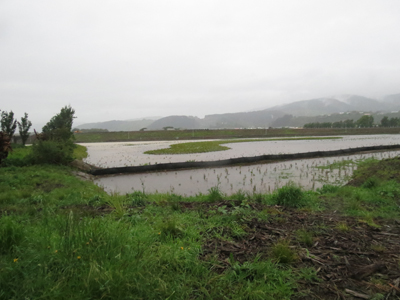
Very early morning at a now gentrified dune lake - after flood
First of all – we would like to send New Year greetings to our visitors; and what a pleasure  to find so many of you, both here and around the world, taking a keen interest in our little conservation drama.

With a little more time on our hands we can now review the spring/summer activity of our local birds around our former dunelake. This has been a very disrupted time with earthmoving activity constant through the period. Then major flooding in September and November would have inundated nesting sites. There has been a serious reduction in species variety and numbers, but some surprising discoveries too.
Now rare - mallard family on the Wharemauku Usually we would have
6-10 nests. This year we have seen two - both on the Wharemauku.  
First to the birds we no longer see. Our biggest concern has been the sharp reduction of ducks including parera, parera-cross, mallards, shovelers and teal.  No sign also of white faced heron, nor have we heard frogs this year, although they are making plenty of noise at Andrew’s pond, a valued wetland about half a kilometre to the north. Here the birds are often fed by the public, but few pukeko and no ducks came out during our visits. There has also been a drop in the scaup population through the District, although the dabchicks seem to be holding their own in the Waikanae estuary and at the Ratanui wetland.
Putangitangi - with five chicks - at Wharemauku bridge
The first chicks to come out on the Wharemauku were putangitangi - our paradise ducks. We haven’t seen a brood  here since 2011 so were delighted to spot two this year; one in relative safety on the Western side of the expressway, while the other came out on the Wharemauku creek beside the new bridge. 
Putangitangi youngsters near fledging
Within three days the parents had moved this family to safer ground in the west as well. Here something happened that we’ve only seen occurring with pukeko, for the two broods appeared to merge together. These birds fledged safely, and then a month later seemed to return for a brief stopover. 
A squadron of adolescent visitors - early January 2017
The fledged youngsters of putangitangi appear to gather in ever growing social squadrons over summer and thirteen of these adolescents were spotted flying in.


Day old pied stilt youngster
More surprisingly, we picked out two broods of pied stilt. We hadn’t seen the nests (a good thing, because they are vulnerable to spurwinged plover and pukeko attack out in the open), but these youngsters came out within a day of each other. One, with two chicks, was in the area east of the expressway close to town, while the other near the north end of the new bridge, reared one youngster. 


Male pied stilt protecting youngster (white blob in background)
That's close enough!!! A male pied stilt defending his chick.
The males in particular are very active in confronting intruders and this is a giveaway for the family. The parents soon took the youngsters into safer territory and out of our view, but the males were still actively patrolling for intruders, so the youngsters appear to have thrived.
Male pied stilt on patrol 1

Coming in for a closer look - male pied stilt 2

One big surprise is the drop in the pukeko population. These birds gather together in the autumn where up to 30 might be seen grazing; then split up again to form communities of 5 to 8 birds. They share nests and nurturing of the young and are usually headed by a matriarch. They can foster  two broods  a year, through summer. 
Pukeko and young.
This year we spotted one lone chick being tended by a lone adult, presumably female. This is a striking departure from their normal behaviour, though the chick appeared to survive.

It is very early days in the settling down of these cleared areas, which are weeding back very rapidly. And, with the high rainfall, (20mls again last night!), the areas remain very waterlogged for this time of year. This is promising and brings the hope that this area might  begin attracting back, some of our missing birds.

Royal Spoonbill on eastern side of expressway
And here’s another hopeful sign - a Royal Spoonbill surveying the changed habitat.  

Meanwhile the globe holds its breath (well, we certainly are),  as the former centres of our democratic world, the UK and the US, pull up their respective sticks and head out into the wilderness… So rather than put a track out for this post, we’re sending this short extract from the combustible pen of Norman Mailer. This from his  comic classic of disturb, 1968’s -Armies of the Night.  We’re hoping it’s not a presentiment.

 How much of Fitzgerald’s long dark night may have come from that fine winnowing sense in the very fine hairs of his nose that the two halves of America were not coming together, and when they failed to touch, all of history might be lost in the divide. Yes, there was a dark night if you had the illusion you could do something about it, and the conviction that not enough had been done. Or was it simply impossible – had the two worlds of America drifted irretrievably apart.


Tuesday, 20 December 2016

Christmas in New Zealand


Welcome to the Midnight Collective Broadsheet 128
Actively supporting NZ’s endangered wetland birds
Pohutukawa - the New Zealand Christmas tree
With the best intentions in the world, we’ve stumbled in getting a couple of new posts up over the last two weeks. Blame Christmas for that so here is our seasonal montage to help make up for it. 
ibid
These foto’s were taken this morning down, at our local beach village. There is a small public pond here, which is about to be ‘retired’ by Council (let’s not go there this time). It should be dry but is currently underwater because of our very wet Spring and early summer. And planted in pohutakawa.
ibid too 
This is our local Xmas tree. The flowers are a little late this year, but still spectacular, especially in the first burst of their bloom.

Camoflaged down one end and at 9.10am (approx) we discovered  this white faced heron. 
White-faced heron
These are wild birds and it is rare to see them in town, though one used to be spotted down here if you kept yourself on the lookout  in the early morning.   
ibid
This is a wild bird but so well camouflaged that people  passing within three feet never spotted him (we think a male given the splatter of colouring on the breast). 
Going

Going
Gone - Spot the heron!


He was motionless and busy fishing, probably on waterboatmen, a very small morsel, though it is surprising the marine and bird life that can frequent these ponds.
White-faced heron 
A couple of years ago an orphan scaup chick found its way in here and was adopted by a mallard with two other chicks to look out for.  That’s another story, but it shows that even these small very public ponds can play a role in supporting some of our rarer water birds. 

Christmas greeting to all our visitors and the best of all New Year's. 

Track we were listening to while posting this - Well, we are going for an outright shaming here in putting up WHAM.. remember this...from back in the 1980's...  
Last Christmas, I gave you my heart 
But the very next day, you gave it away 
This year, to save me from tears 
I'll give it to someone special-    

Wednesday, 7 December 2016

Rare visit by Black-fronted Dotterel to Wharemauku M2PP NZ expressway bridge


Welcome to the Midnight Collective Broadsheet 127
Actively supporting NZ’s endangered wetland birds
Black-fronted Dotterel
The best time for visiting wetland areas is very early morning and we were down at the now destroyed dune lake around 6.40am recently and sighted these rare visitors.
Dotterels sighted to right and outside bridge support
Our heart skipped a beat because they are easily mistaken at a distance, for one of New Zealand’s rarest birds – the shore plover, of which there are around 250 left in the world.

Shore Plover
A small population of these plovers has been settled on Mana Island just south of here. They sometimes visit the mainland and warnings go out to watch for them so we were hopeful they might have found their way north along the coast.  But it was not to be as DoC confirmed that these are Black-fronted dotterels, not that delicate and notably over-trusting species. (Like many NZ species they are not used to mammals and entire populations can be wiped out by just one rat –especially at nesting time).  

As you can see from this video these Australian immigrants are rather beautiful and endearing birds. They were first recorded in the 1950’s in Hawke’s Bay, (on the East Coast) then spotted breeding and have since begun a migration across the North Island and into the South. 
Female black fronted dotterel
This is the first time we have seen them here, though we spotted them on two different occasions, so perhaps they have now settled and will begin to breed.
Male Black-fronted dotterel
Unlike many dotterels, that usually set up shop close to estuary’s and the beach, these birds can be seen more usually inland, so only time will tell whether the settle to breed here.

Since expressway construction began we have seen major changes in the bird populations in this area. This sighting is a plus, but most have not been positive. The pukeko population, previously settled into around four or five groupings of 6-8 birds has been scattered far and wide and we have encountered only one chick this year. This was attended, very unusually, by only one adult female.  Seagulls which we never used to find here, now visit the area regularly (not a good thing), while duck, teal and shoveller populations have completely disappeared.  Like wise kahu (hawk) that used to patrol through the area have been giving it a wide birth.

We’ll cover this issue in more depth in a new post.

We would also note the continued silence around  the expressway opening.  Two months ago enthusiastic media releases put it six months ahead of schedule and expected it to open well before Christmas. This appears to have been over-sold with no opening date yet set. Meanwhile the traffic continues to jam up on Kapiti Road; so watch this space.
    
Track we were listening to while posting this…
We have been going with John Lennon melancholy all day and while we wanted to use -You’ve got to hide your love away, we finally went with  -If I fell. Thinking we better keep something in reserve for when this world really hits the skids.
If I fell in love with you
Would you promise to be true
And help me understand
Cos I've been in love before
And I found that love was more
Than just holding hands


Friday, 25 November 2016

New flood inundates Bridge site at M2PP expressway Raumati Beach


Welcome to the Midnight Collective Broadsheet 126
Actively supporting NZ’s endangered wetland birds
At the height of this flood the Wharemauku creek (centre of foto) merged with these flooded areas
Gentrification well underway as this western side begins to flood 
We are putting up a foto essay of a new large flood that swamped the new around the M2PP Wharemauku Bridge site on November 15. This flood reached the same level as the September 4 flood and confirms that this area will now be subject to major flooding events although, once again, this was not a serious flooding event and would not have caused local evacuations in residential areas. 

 
Around 85mm of rain was recorded in Raumati Beach, though upwards of 140mm was reported from the local Tararua ranges. This caused the Waikanae River 10 km to the north, to flood into surrounding farmland. 

One feature of both this and the previous flooding in early September has been the way in which the Wharemauku creek level maintained itself at bank-topping height over a 24 hour period and was still at around 60% capacity the next morning. We have had a very wet spring with two major flooding events. Over the past five years we might have seen one storm like this every two years. We have had two in the last three months. 

No conclusions can be drawn of course, about the long term climate implications, although over time this level of flooding will build up silt in these flooded areas. While this creek can rise very quickly, it usually goes down just as fast. It peaks about an hour after the rain stops but in both these floods this didn’t happen.

Wharemauku Creek monitor 8.14am

Wharemauku monitor 5.10pm at full flood. The  flood of May last year that caused evacuations downstream peaked a foot above this monitor.


Flood water sucked out through drain into the Wharemauku excavations.


Drain backfilling from Wharemauku, early morning.


Flooding begins to inundate new plantings –east of expressway 8.15am


Same eastern area inundated 5.10pm


Western area backfilling 7.45am Gentrification around this area is well underway.


Flood peak in Western area at 5.15pm


Western area from the back looking north– bridge in distance; centre left 8.15am


The Wharemauku walking track at peak flood downstream in late afternoon sunlight. 5.15pm The major flood of last year peaked three feet above this.

Though it is still very early days in the life of this new area our next post will look at some of the changes that are occurring to the animal and plant life of this area.

Track we were listening to while posting this – Leader of the Pack from the Shangri-Las.


Mm--
"Is he really going out with him?
"Well, there he is, Let's ask him"
"Sam, is that the Trumpets ring you're wearing?"
"Mm-hm"
"Gee, it must be great riding him"


We are thinking of you all in the US of A; pondering as many of you no doubt are, the gerrymander of how someone who loses an election, actually wins. (It used to happen here before we brought in proportional representation). But then hoping you won't take it personally when it comes to the point of breaking off diplomatic relations. (Are they really trying to force the Brits to sack their ambassador? Will the Brits oblige?)


Sunday, 13 November 2016

The Earthquake in New Zealand - An Eyewitness account


Welcome to the Midnight Collective Broadsheet 125
Actively supporting NZ’s endangered wetland birds
Kaikoura - radionz.co.nz

We imagine our followers, especially those living overseas with little experience of such things, will be interested in the earthquake overnight which struck around midnight and was surprisingly severe here at Raumati Beach - surprising, because we live around 200 kilometres from the epicentre.

The big one came through when we were in bed, though not asleep. The first sign was an odd vibration, which generated a moment of dither, because it wasn’t clear what was going on. But then it became very clear, as a rolling motion set in. It felt as if the sea was lifting, then pitching the house around, though at first it was gentle so we just waited for it to settle. We are familiar with earthquakes like this on sand dune country where the force seems to concentrate in certain areas, with others, even a mile away, relatively unaffected. Most just fizzle away to nothing but when this one didn’t and began to gather force it started to get scary.

15 seconds in, it suddenly up the ante. 

The light in the centre of the room began to gyrate wildly, and when the bedroom door started flapping around on a 30 degree arc, we bolted for it. This was about thirty seconds in. We stopped under the door frame (like you’re supposed to), but there was quite a noise now and it just kept getting worse, so we made a run for it down the hall, and out through the front door..


House destroyed north of Kaikoura -radionz.co.nz

We were greeted by an eerie sight. The power had gone, so the neighbourhood was in darkness, but with a full moon, the garden and drive were still clearly lit. Shrubs and small trees were swaying violently from one side to the other, though overhead a most extraordinary lightning show was taking place. This was so unexpected and strange, that we thought it must be from broken power lines, but a friend calling this morning confirmed that she too had seen it, from up in the Tararua’s about 10 kms away. It was as if the lighning was sparking up behind the clouds.   
Culverden supermarket - at the centre -radionz.co.nz
After about a minute, that seemed an age,  the ordeal began to settle and we ventured back into the house. With our emergency torch we found curtains, lights and hanging plants all still swinging wildly, though fortunately there seemed little damage, other than a few things falling from shelves to the floor. But our long night had just got underway, because we needed to know how family and friends were faring. Here the cellphone came into its own and over the next half hour we managed to contact everyone from Wellington, through as far south as Timaru. 

The all night national radio service had begun calling in its reporters and they provided a wonderful service in keeping everyone informed and calm, even as the news reports remained sketchy.
Kaikoura scenic highway slip -radionz.co.nz
The first reports centred a 6.6 quake around 80 km north of Christchurch though after two hours was upgraded to 7.5.  The big worry was the coastal town of Kaikoura, which harbours a whale sanctuary. It appeared to have disappeared off the communications map.  But there were many aftershocks. They were coming through every five to ten minutes  and a particularly large one at the top of the South Island, appears to have badly affected Wellington. 
Damage in Wellington - radionz.co.nz
Damage on Wellington waterfront  -radionz.co.nz
Lifts were out of action, the Cook Strait ferry terminal had been damaged, liquefaction was being reported in reclaimed areas and people were being evacuated from apartment buildings and hotels.  Another report placed one aftershock as far away as Taihape on the North Island’s volcanic plateau: but then an hour in and a tsunami warning was issued. 
Blenheim road closure  -radionz.co.nz
Families sheltering from tsunami - Wellington -radionz.co.nz  
A two metre tsunami had been reported in Kaikoura and because worse could be on its way, the entire eastern coast of New Zealand was deemed at risk. People began to be evacuated from around Wellington and Christchurch and then we were personally affected as a report came in that the tide had gone out an hour early (2.30am) at our local beach. We are on the west coast and very close to the beach, yet on a hill, so felt we’d be ok. Fortunately we were; this time. By four o’clock we managed to grab some shut eye, though the cellphone was bleating at us again at 5.30, with people wanting to know if we were ok. 
Road damage Kaikoura - radionz.co.nz
How regrettable it is that this generation is perhaps the best off ever, in terms of relative affluence and access to health care, along with all the things that should make life a pleasure; yet it takes something like this to bring out the best in them.

It is now nearly 14 hours since the first quake hit and aftershocks are still coming through, with two big ones over the past hour. They are very disconcerting.

Postscript
We would like to express our thanks to Radio New Zealand for providing crucial well sourced information as this calamity played out. It played the major role in keeping our communities up to date on on the rails. This organization, one of the last of the old style, non aligned, professional news organisations in the country, has been under attack from a conservative Government for years now, with no increase to its funding since 2008. It has maintained its integrity by slowly selling off assets, which can’t of course continue. How different this is to this Government’s help in keeping a derisible commercial media company, previously owned by one of its cabinet ministers, out of bankruptcy…