Wednesday, 13 May 2015

Kapiti Flood Emergency - The dune lake fights back


Welcome to the Midnight Collective Broadsheet 76
Actively supporting NZ’s endangered wetland birds
Flooding Wharemauku

After a severe rain storm hit the Kapiti Coast overnight dropping 90mm plus on the district and its nearby foothills, a flooding emergency is currently underway. The Wharemauku has been up to its stopbanks – the highest we have seen it in four years, with around 20 houses now evacuated in its downstream reaches.We have been out there assessing the chaos as it developed and here are some photographs that tell the story.
Wharemauku at airport

The weather has just set in again as we write this, (2.00pm) but here is the Wharemauku at lunchtime, looking toward the back of the airport and then downstream. The stopbanks were raised after a big flood in 1998 and here they are a couple of feet below that peak. It is no longer a creek but a river and homes downstream from here have been evacuated as it leaks out into the roadways. The 1998 flood occurred after three days rain whereas the Wharemauku raised to these levels after a 12 hour downpour. The road and rail link into Wellingotn are currently blocked.  
Disabled pollution monitor May 9
Disappeared pollution monitor May 14
The dunelake is about two km upstream from here and this is the Wharemauku again, at the pollution monitor. The original photo of the damaged monitor was taken last Saturday, the ripple in the water is where it is today.

The most dramatic change however has occurred at the dune lake. The NZTA made submissions to the Board of Inquiry stating that this was not a wetland. From here you can make up your own mind.
Dunelake excavations May 12
Dune lake excavations May 14, 10am
Dune lake excavations May 14, noon
The first photograph was taken after about 20mm fell last week. This year the dunelake was about a month behind its usual size but that rain brought it up around what it should be. The last twelve hours however, have put it about two months ahead, though it still has a way to go to reach its September-October peak. Here is also confirmed the way water drains down from the town end of this area into this corner. It is always the last spot to dry up in January. The NZTA  cleared a track long the fence line last week and this has now become a wetland in its own right, while facilitating the passage of water down into the dune lake. Another reason why it has filled up so quickly. The second photograph was taken around ten this morning, the third at 12. You can see from these two images just how fast this area has filled. 
Wharemauku flood May 14 

The most dramatic area of flooding however is in the flood plain opposite the dunelake. Here the Wharemauku has flooded out into the open paddocks beyond, which has helped relieve water pressure down stream; though it will keep the Wharemauku high while it floods out – or rather - when it floods out. 

This post is for Willa who arrived on this planet 3 days ago and is one of the main reasons we’re trying to make it a better place to live in.

Track we were listening to while posting this –Bessie Smith – Back Water Blues...

When it rains five days and the skies turn dark as night
Then trouble's takin' place
In the lowlands at night


Sunday, 10 May 2015

The End of the Dune Lake 1 - You saw it here first!


Welcome to the Midnight Collective Broadsheet 75
Actively supporting NZ’s endangered wetland birds

Forest understory clearance underway May 2015
Over the last week the bulldozers have been clearing their way through the old Wharemauku swamp and are now working down in the dune lake itself. On their way through they felled about half our last stand of remnant native forest understory. We couldn’t get in to have a close look, but it seemed mostly mahoe and then a stand of karaka.
Karaka remnant - now you see it

Karak remnant - now you don't.
None of this has been reported in the local news media, so you saw it here first.
Cleared site

Skepticism however, has been expressed in correspondence to the local papers over claims from the NZTA that they are re-establishing forest eco-systems in their indigenous planting programmes. These were described, (the correspondent obviously intent on looking a gift horse in the mouth), as beautification projects designed to hide the motorway and muffle its noise.

Attention was also drawn to the fate of a recent planting programme in a motorway realignment south of the town. This replanted escarpment has never been managed subsequent to the NZTA leaving the area, and is now being overrun with weeds, gorse and blackberry.
Former NZTA planting at McKays Crossing  
In response the NZTA media team upped the ante, by firing off a media story praising their own beneficence, in lavishing such gifts on the local community while outlining the plants and local jobs involved. No response was made to the questions raised, though here’s the rub... the story was dutifully published, unedited. It  appeared word for self-congratulatory word, in both local papers.

In one of the papers a further story outlining the NZTA’s deal with a local Church made the front page.  The story was again a laudatory one with no questions being asked about money that might have changed hands over this deal, though rumours are circulating that it involved significant cash sums. Much was also made of a park and public pond that the NZTA would construct on the site. Again, no mention was made as to who would own this or how it would be subsequently managed when the NZTA left town. They also explained how they were re-establishing this as a wetland to replace the ones they are destroying. Such a pond however would never supply the kind of fecund wild habitat they are currently destroying down at the dune lake.

So how did our news media ever get this clap happy? Is it incompetence? Are they hanging out for corporate jobs themselves, where the pay is around double what they’ll be taking home? Are they getting too close socially to their opposite numbers in the business community? Are they simply understaffed?

Watch this space.

Track we were listening to while posting this It has to be with thanks to  Ben E. King RIP.

When the night has come
And the land is dark
And the moon is the only light we'll see
No I won't be afraid
Oh, I won't be afraid
Just as long as you stand, stand by me


Tuesday, 5 May 2015

A note on pukeko and the takahe - one of New Zealand's rarest birds


Welcome to the Midnight Collective Broadsheet 74
Actively supporting NZ’s endangered wetland birds
Pukeko matriarch with chicks at dune lake
Pukeko sit up near the top of the food chain in these parts and are not one of our favourite birds because they predate the young of rarer birds, including pied stilt.  Curiously we have only seen this happening during the breeding season when they were raising their own chicks and they make a point of feeding any luckless ducklings to their own young. Last winter however, when ducklings started coming out on the lake in June they appeared to take little interest in them (though the mother ducks weren’t taking any chances and hived the youngsters off into the blackberry anyway).

In feeding their young, there is an established pecking order. Close neighbours occasionally lob crusts of bread over the rear fence and one young bird picked up one then marched it all the way round the dune lake to pass to a second bird who then passed it to the matriarch. She appears to take charge of the brood which is seldom out of her sight in the first couple of weeks. There is a very strong community maternal instinct in all these birds with the females laying their eggs in a shared nest.
Pukeko feeding young
And then we have seen one of the older females showing a youngster how to feed one of the chicks. She pulled out a stem of reed from the lake, then chipped the white tip into manageable size to pass to the youngster to pass to the chick. It indicates that there is quite a lot of learned behaviour occurs in building pukeko relationships. Then some ritual bill tapping. Two adults will begin a fast reciprocal tap-tapping against each others beak. You may theorise that this serves to foster closer family relations or that it emerges from close family relations; but it just looks like fun.
Pukeko tending sick youngster
And this group bonding can happen on a larger scale. Two years ago, two different broods were bringing up youngsters at either end of the lake but within a week they had merged into one and were all involved in fostering the youngsters. This indicates perhaps, that these birds have a wider social connectivity than is immediately obvious.

Ordinarily there are around five to seven pukeko settled around the lake. At this time of year however they all seem to come together, and begin grazing in the more open spaces along the wharemauku creek and beyond. We counted around 25 a couple of days ago amicably feeding as a large group in one of the paddocks (though couldn’t get a decent photo of them). This togetherness seems to go on for around six weeks, until they begin splitting up once again, into four or five smaller cadres.

Pukeko are thought to be recent arrivals from Australia. They flew here but have already begun to lose this ability. In this they are following the path of the takahe – with whom they share a common ancestor – though the takahe are NZ birds and noweher near as aggressive as the Australian import. 
Spot the difference - Takahe adult Mana island
Takahe do not have the ability to protect themselves against introduced carnivores (including humans) and behave like big bossy hens. This is very endearing but they are wild animals and very endangered. They were rediscovered in 1948 and slowly recovering in numbers   having been spread through New Zealand to protect the overall population from any outbreaks of deadly avian diseases.
Takahe pair with fledgling - Mana Island
These photographs were taken on Mana Island on the West Coast near Wellington where the takahe are thriving. In 1948 when rediscovered there were over 400 birds though this dropped to 180 in the 1980's as a result of competition from deer in the Fiordland National Park. It has taken 15 years of intensive management to move this from 200 in 2000, to  260+ today. A viable population is thought to be 500 plus.   

Track we were listening to while posting this Clarence 'Frogman' Henry.  

I don't know why I love you but I do. 
I don't know why I cry so but I do. 
I only know I 'm lonely and that I want you only. 
I don't know why I love you but I do.

We’ve been watching reruns of Treme and it shows... 

Wednesday, 29 April 2015

White-faced heron in New Zealand


Welcome to the Midnight Collective Broadsheet 73
Actively supporting NZ’s endangered wetland birds 
White-faced heron -Pauatahanui inlet
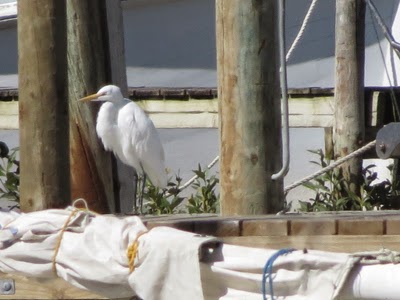
We haven’t seen a great deal of this elegant and graceful bird over the past summer  but in the last week have managed to run into three –one at the Waikanae River then two more down at the Pauatahanui Inlet where there are sometimes up to 5 birds though they remain loners and unlike the spoonbills, are rarely seen feeding in groups.

You get a sense of how scary it must be to be inanga (small sprats) or frogs, waiting in what you think is adequate cover  as the sleek, fierce shadow of this bird with her x-ray vision comes stalking passed. We have left our film silent to try and gain a sense of the grace and peacefulness you find in wetland areas though at the start of the Waikanae section you can see the bird hoist an inanga out of the river and flick it up then swallow in one movement, spraying off the water. We had trouble keeping up with it. Then there were people and dogs walking along the opposite bank and that is what is causing the bird to bolt into deeper water. 

A heron used to be a regular at the dune lake and then, through autumn you might run into one feeding in the Wharemauku creek or at the back of the airport. We haven't seen them however, since the expressway excavators got going. A female would bring her fledgling down to feed. She looked pretty exhausted at the end of the breeding season and was initially very shy, but then seemed to get used to us hanging around with a camera. There was always plenty of food, which is the main attraction but being such big birds they are vulnerable to dogs, especially when they take it into their heads to get down into the creek. Yet we never saw one in trouble; nor any of the shags that also haunt the creek around this time of year.
White-faced heron feeding in the Waikanae River  
We have used a photograph of one of these herons perched in a stand of california pine (radiata), as a flyer for the plight of this rare dunelake. But now the birds have gone and so to, the stand of pine an indication of how quickly this haven is disappearing.

I will go to watch the animals, and let
something of their composure glide
into my limbs - Rainer Maria Rilke 

Tuesday, 21 April 2015

Autumn in New Zealand - an update


Welcome to the Midnight Collective Broadsheet 72
Actively supporting NZ’s endangered wetland birds

The days are now beginning to close in, with a very early cold snap bringing hail showers to Auckland and leaving snow on the Desert Rd (Centre of the north Island). So we are starting to get a taste of wintry weather, though it remains unusually mild.
NZ scaup pair at dune lake
Still, local birds are not deceived, with both pied stilts and now these scaup having packed up and left. Most of the waterbirds begin to flock this time of the year and we found 20 or so scaup banding together at the Waikanae estuary, just prior to their leaving. It remains a  mystery as to where they go, though Lake Taupo might be one destination. We haven’t seen a lot of the stilts this year (one pair in October looked very broody at the back of the airport, but decided against it), so we didn’t notice their leaving; but the scaup departed in early April.
Grey teal - Ratanui wetland
This colony of grey teal will stay here however and had gathered to sun themselves at the Ratanui wetland. They are noticeably less aggressive in their mating behaviours than introduced mallards (like most of our native waterbirds) so paired up couples were hanging out with the colony. 
Grey Teal - tete pair
These animals however will soon be decimated because  the duck shooting season is approaching and here we get an idea of New Zealand conservation in practice (rather than theory). This bird is a protected species, but 6% of the population is still shot during the season.      
Young grey teal - tete
We remain concerned over the fate of the dabchick pair at the Waikanae estuary. 
Lone dabchick-weweia at Waikanae loagoon
We have only seen one bird in nearly three months now though another lone bird has settled at Ratanui. 
On the lookout - lone dabchick at Ratanui
This delicate little grebe previously hung out with the family of scaup there which tolerated rather than adopted him;  but following their departure he is now left with a small group of coot. This recent Australian immigrant is very territorial (like Aussies themselves) and the dabchick was steering well clear.
A NZ icon amongst the sails at Thames
Finally an image of another kotuku – this one sailed in from the Hauraki Gulf onto a footbridge down at the Thames wharf…It seemed quite at home here in the local marina though home is 1200km away at the Okarito Lagoon Westland.   

Track we were listening to while posting this Siouxsie and the Banshees - This Wheels On Fire

If your mem'ry serves you well
You'll remember you're the one
That called on me to call on them
To get your favors done
And after ev'ry plan had failed
And there was nothing more to tell
You knew that we would meet again
If your mem'ry serves you well


 from Bob Dylan and Rick Danko of course - which really dates us (sigh)...
Jill Studd's Blog 

Sunday, 12 April 2015

Why would you bulldoze this?


Welcome to the Midnight Collective Broadsheet 71
Actively supporting NZ’s endangered wetland birds

This magnificent Royal Spoonbill was pictured feeding (with two others out of picture) 5 minutes walk from the centre of a town keen  to identify itself as The Nature Coast. 
It’s a short 20 minute boat trip to New Zealand’s premier endangered bird sanctuary Kapiti Island. Here they have started a colony and they fly across the strait to feed.

This dune lake used to be one of the few safe wetland areas where this bird could do so in reasonable safely in the centre of an urban area. At the height of the season there is a lot of food in this lake where five of these birds have been seen fattening themselves up at one time.

They seem to like it here and would have proved a major drawcard for local people and visitors alike, had the wetland been recognised and protected, but its too late now because they haven’t been seen since early January 2014 when the Expressway excavations got underway in earnest.

They have been spotted feeding in a retirement village pond down by the coast however, though this is a much more perilously enclosed habitat for these large birds to get in and out of, and they are much more at risk from harassment by dogs.

So we are stumped too!

Track we were listening while posting this? Well, hasn't been a track at all, but wall to wall Coachella on a 46inch screen and high density sound in the dark with curtains drawn and right through the day –Ok we agree, it is shameful, but we simply can’t help ourselves anymore and don’t even try to. This is the first time its been beamed all the way over here from California where you might almost think you’re there though even with five screens we couldn’t keep up with everything and missed Royal Blood while still hoping to catch them on a replay; but goodness knows how those on the ground manage to get round everything when we couldn’t. Enough already! Our pick for who got away with the top prize is Run The Jewels who have a chemistry that couldn’t be bottled try all you might, for it flows right through everyone on stage and then into the audience at large – though hey! we couldn’t hear most of the words which is probably just as well – We are rock and roll people however and Jack White should have walked away with this one by a country mile but he’s turned into such a flawed human being that we didn’t want to encourage him any further because, though  we all have our moments we try a little harder, than he seems to want to; the next time around…

And it’s now Monday over here but we’ve  still got a day to go, so we’ll be staying right where we are.

Jill Studd’s Blog
Contact Us

Tuesday, 7 April 2015

Autumn comes to New Zealand Wetlands


Welcome to the Midnight Collective Broadsheet 71
Actively supporting NZ’s endangered wetland birds
It is nearing the middle of autumn and though it still remains very warm (22oC most days) over the last 24 hours we have had out first substantial fall of rain for quite some time. It has cleared out the clogged Wharemauku and should have started filling the dune lake so it is going to be interesting to see how the expressway consortium cope with it, digging through one of the deepest and wettest deposits of peat on their route.

New Zealand Scaup - a diving duck

Meanwhile we are seeing the usual prickly behaviours as many of these water birds begin pairing up. The pied stilt and the NZ scaup however are starting to gather in larger groups in preparation for returning to their winter quarters. The stilts were spotted in numbers on a beach about 30 km to the north, while the scaup are clumping together into larger communities on lakes in the north of the town. We mentioned last year that we counted around 100 on Lake Taupo and though we are unsure where ours are heading to, this is one area where collect in order to overwinter and select a mate.
Pied Stilts
We have been concerned over the fate of our local dabchicks for although the pair at the Waikanae estuary have raised one chick we haven’t seen the two together for some time now, while a lone youngster has settled at the Ratanui wetland. It is unfortunate that a family of coot has also taken up residence here. These are an aggressive Australian import – a fierce competitor with dabchicks and scaup which are much shyer (and more alluring) birds. Whenever the coot are near the others are always on guard and ready to make for the safety of the raupo.

Dabchick (small NZ grebe)

Track we were listening to while posting this – It's an album Blue – and Joni Mitchell –who else – We’ve been more than a little anxious about this last week…