Thursday, 12 June 2014

Duckling (Postscript)


Welcome to the Midnight Collective Broadsheet 25
Actively supporting NZ’s endangered wetland birds

Just a short update to the previous duckling post... after a visit to check on them this evening mum had moved her brood  onto an island in the centre of the wetland. It soon became apparent why, when a pukeko came out of the blackberry and she came up to 'red alert'. The pukeko will stalk her brood and with ten and on her own, its unlikely that she will be able to defend them all. 
Parera-cross female eyeballing a pukeko (brood tucked beneath her). June 13 4pm 
The good news however, is that she seems an experienced parent and has shown plenty of nous in getting them out to this redoubt and keeping her weather eye on the pukeko. This isnt the first time she's been through this charade. 

Though we shouldnt be reporting this kind of activity until September and then some.

Ducklings!


Welcome to the Midnight Collective Broadsheet 24
Actively supporting NZ’s endangered wetland birds

 We thought we were off the mark in trying to anticipate a pukeko nest this time of year, but it turns out we weren’t so far adrift of the mark.
Parera-cross female duck with 10 chicks -June 13 2014 
Taking a detour down to the dune lake late this morning we found these chicks with their parera-cross mum, having just come out onto the banks of the newly forming lake to sun themselves. (Mum is primarily mallard, but the colour on her wing gives away the parera running through her veins)

There are ten live chicks here basking yet this is very perplexing. It takes around 20-22 days for her chicks to hatch, which means she began sitting on the nest in the third week of May – pretty normal if you live in upstate New York or Norwich England but not in Raumati Beach NZ at this time of the year. We had a run of pretty chilly frosts around this time so it must have been touch and go keeping her eggs warm through these long nights. And she will be hungry after a long fast and there isn’t a lot of food on this lake yet  (otherwise the others would be down here feeding). And then we saw the resident black cat snooping around the back of the blackberry so the prospects for the longevity of her brood do not look good…though the top predator – the pukeko- have moved house further up the creek which should give them a little time at least.

Yet what is a big plus, is that it finally identifies this area of  blackberry as a key nesting area for these animals. (When they are out on the water it is very difficult to pinpoint where they’ve come out from.)

What has added  to our perplexity however, is this further brood of black swan cygnets, spotted with parents at one of the domestic ponds in the town.
Black swan pair with cygnets -June 13 2014
 These will be a month old now yet are still a very late autumn brood. They should fare better because they are being hand fed by the local residents and anyone else who happens to be going passed. They are proving irresistible to motorists, with cars stopping to ogle and take photographs.

What no-one is stopping to watch however is the sight across the road at the airport where the airport company is in the process of ripping out the last significant local stand of raupo. 
Removal of raupo stand Kapiti airport
These would have previously been home to fernbird, spotless crake and bittern. This is very symptomatic of what's going on in the country at the moment, with the entire airport perimeter now headed for ‘warehouse’ development and environmental legislation powerless to stop it.

Track we were listening to while posting this -Helen Reddy -Summer of '71
We're out of our mescaline minds
  talkin bout we met travellin behind
And diggin we're three of a kind
havin such a good time


Sunday, 8 June 2014

Solstice


Welcome to the Midnight Collective Broadsheet 23
Actively supporting NZ’s endangered wetland birds

Mid-winter solstice (Southern Hemisphere) is now little more than 10 days away and the dune lake, true to the form of previous years is beginning to fill. Three or four days of frost is already behind us yet everything is still late this year, and it remains unusually warm some days (17oC yesterday). So autumn is still in the air and the neighbours keep on mowing their lawns. 

These images were all taken at around the same time, and compare the onset of winter over the last three years.
Dune lake -early June 2012
Dune lake -early June 2013
Dune lake -frosty early June morning 2014
They show what looks like a narrow body of water in what will become the centre of the lake, but in fact most of the area is now underwater and  impassable (in sensible footware).  There is not the same weed growth as last year -it was caused by the drought- and the swamp remains covered in thick decaying grass. In  past years a large southerly system announcing the onset of true winter has swept through in mid-to-late June, filling the lake to a level where the wetland birds begin to feel safe to congregate -those that have survived the duck shooting season that is. They seem to need a reasonable body of water in open country before they begin to settle. Even so,  despite the swamp being now back in business, a small domestic cat was still seen, hunting through it  last week. 
   
Birds  are however, beginning to loiter around the smaller wetland over the other side of the wharemauku creek, looking back the other way, from this hill.
Dune Lake -late autumn - showing new rushes centre of picture
They remain very nervous, because of duck shooting and immediately took flight as we came over the brow last week.

A development this year is the growth of a new colony of rushes seen in the green patch in the centre (above). Its rapid growth has taken us by surprise, having almost doubled in size since summer. This should provide a redoubt in the centre of the lake and perhaps enough cover for the laying of a nest or two. We imagined this pukeko to be doing just that, as it began settling out the centre of this rush, but it is still too early in the season, and it was primarily interested in hoiking the new shoots out of the centre of the rush and chewing up the juicy sugar rich ends. 
Pukeko in rushes in centre of lake
She seems to be the matriarch of this group however, so we’ll be keeping a close eye on them from here. They can start mating from around this time, with the males lining up to try their luck. But she’s very particular, needless to stay, and will stare the youngsters down, if she doesn’t think they’re up to the job.   

It is a dark and  gloomy afternoon here in Raumati Beach and has just started raining again…

Track we were listening to while posting this 
Woody Guthrie’s  Do Re Mi 
If you aint got the do re mi boys
You aint got the do re mi
You better go back to beautiful Texas
Oklahoma, Kansa, Georgia, Tenessee
California is a garden of Eden
A paradise to live in or see
But believe it or not 
You wont find it so hot
If you aint got that do re mi.

Saturday, 31 May 2014

Kotare – Kingfisher -Do we have a pair?


Welcome to the Midnight Collective Broadsheet 22
Actively supporting NZ’s endangered wetland bird

Kotare are solitary and elusive birds, very self absorbed, rarely seen in pairs or in this locality though we managed to pick this one out yesterday. 
Kotare overlooking Drain 7
It is looking for a feed in the fabled Drain 7, around the back of the dune lake. The drain was leaking black swamp water into the Wharemauku yesterday morning, as yet another stormy southerly was beginning to settle in, and seemed to give up in disgust. Yet there remains good food in these waterways even with winter just around the corner, if the regular appearance of what we are tempted now to call OUR Little Shag is anything to go by. S/he is drying out up here, in the early morning and is a regular in the creek, coming up from the coast on the rising tide.
Little Shag overlooking Wharemauku
Here is about as inland as the tidal surge comes, and is a couple of km’s from the dune lake.    

There was probably quite a population of kotare in this area 130 years ago when it was still swamp forest. It is not widely known, but these birds can use their beaks like American woodpeckers – hammering into trees to get at huhu and other grubs inside. They do this over many generations and in old forest trees (though there aren’t any left in this region), you will sometimes see where they’ve drilled holes like scattergun shots from a target, into the trunk of a tree, up where it begins to spread into a canopy.

What we are hoping for is a pair of kotare to have settled into this   area and perhaps we have one with this male turning up about a month ago.(One used to sit on a neighbours TV antenna, picking off the stick insects that were chomping through new growth on our feijoa trees. We encouraged them, so it was something of a conservation dilemma as to whether we should interfere or not. (We didn’t).) Kotare have amazing eyesight and are versatile feeders when it comes to making a meal for themselves and can feed just as well in thick grassy wasteland as in the stream. It is always good to see them because, like ladybirds,  they are reputed to bring good luck. 
Male kotare near Wharemauku April 16

What we would like to see however is a nest full of youngsters in the coming season and comparing the above foto, with this one – perhaps we do have a pair in the making. We’ll just have to wait and see.


We're sending out Big Bill Broonzy's Glory of Love on this one
Long as there's the two of us
Have the world and its charm
Long as there's the two of us
Hold each others arm 


Sunday, 18 May 2014

Wharemauku Swamp 55 NZTA 0


Welcome to the Midnight Collective Broadsheet 21
Actively supporting NZ’s endangered wetland birds

BLack water lake forming at the Poplar Rd site
In a previous post (Broadsheet 5) in early February we indicated that the NZTA (the New Zealand Transport Authority) was having trouble with their preferred option of digging out the Wharemauku Swamp and laying the Kapiti Expressway upon what they thought would be solid ground underneath.  They had put this option to the Board of Inquiry while admitting it was theoretical, because they didn’t know what was going on underground. There was concern about this strategy because it would mean putting a dam through the centre of this region without any understanding of where the water was flowing underground.
 
Logs used to settle swamp and drag off water-Poplar Rd 
If water was flowing towards the coast underground, which seemed likely given that  swamp water flowed into the Wharemauku every time it rained, it meant that it would dry out the coastal side and  dam up the other, the consequences of which could have been very serious for our most important wetlands, including the last remaining remnant of swamp forest at Nga Manu Nature Reserve The Board for reasons best known to itself, showed little interest in the matter, trusting to the hem and the haw  put in front of it by the NZTA.
 
Black water lake on the south side of Poplar Rd
Three weeks ago the NZTA finally admitted to abandoning this option because what they have encountered isn’t watery peat but peaty water. They can’t dig it out. Now with winter setting in you can see the problems they are encountering. They have tried to put a drain down one side of the expressway, on the approach to Poplar Rd but succeeded simply in creating a large blackwater lake. This  area forms a lake through winter anyway (which presumably the NZTA know) so the situation is only going to get worse.

Option B is now being actioned which involves laying 1.5 million tonnes of rock fill on top of this very liquid core. Around 20 years or so ago, the north-western motorway in Auckland  took this option through the mangrove swamps on the Waitamata. It now lies underwater at full tide and is undergoing a long, inconvenient and very costly repair.

The most troubling issue however has been the role of the news media, which has been acting as a cheer leader for the NZTA. It has carried no independent critical analysis of why the NZTA has changed its minds direction, or carried out any investigation into how these decisions were made  and their financial implications. What they are carrying are rehashed stories churned out by the NZTA’s media managers.

So remember, when all of this turns to custard –you heard it hear first. And here finally is a sobering photograph that illustrates just how tricky it is trying to do construction work in a 1000 year old swamp. These are the piles of a new building, currently being erected near Coastlands. This is about a kilometre from where the expressway will be carving up the dune lake. Our estimate is that these piles were set 30 feet plus into the ground. Yet this is close to the railway and the hillside in relatively benign  terrain.
Piles waiting to be driven for new building at Coastlands
Track we were listening to while posting this Elvis
Don't stop thinking of me,
don't make me feel this way


Tuesday, 13 May 2014

Spousal abuse in Paradise Ducks -Putangitangi


Welcome to the Midnight Collective Broadsheet 20
Actively supporting NZ’s endangered wetland birds

Paradise duck male attacks his mate
Cowering female paradise duck
NZ Paradise Ducks-Putangitangi are treated with deference because they show an especial affection for their mates. The males work hard in helping to rear their families and these animals are thought to be monogamous and pair up for life. In one incident some years ago in Christchurch, near the botanical gardens a female caused something of a sensation by keeping vigil for some days over the spot in the city where her mate had been run down by a car.

A pair of these ducks have currently settled into our wetland area and can be seen most days, grazing on the banks of the Wharemauku or in the airport precinct. Putangitangi haven’t raised a family on the dune lake for two years now and we were hoping these two might break the drought; not so much because they are rare but because the mothers in particular  are much more alert to threats than some of the less canny birds like grey teal, parera and pied stilt, which helps make a safer environment for them all.

This morning however we rather punctured the paradise ducks reputation in observing the male physically assaulting the female. Sometimes this aggressive behaviour marks a prelude to mating –which can be very rough on the female- though in this instance it looks rather like a simple case of IMS -irritable male syndrome. They made up afterwards with a traditional grooming session; though the female looked distressingly cowered by her mate’s pugnacity
 
Paradise ducks grooming
On the plus side of this, once again here is evidence of complex behaviour in animals that points to the complexity with which their minds are working.  We can never know what’s going on in an animal’s mind (If you want to explore this topic then Thomas Nagel’s What is it like to be a Bat is a good place to start thinking about thinking about animals thinking – though be forewarned, the territory you’re  venturing into is a riddle wrapped in a mystery inside an enigma (That's Winston Churchill on Russia!)). However what this behaviour does indicate is that the two are involved in a relationship that isn’t as different from the human versionours as we have come to think; and that the consciousness producing ‘machinery’ needed to sustain it may not therefore, by very  different from ours either.

An update on NIWA
NIWA pollution monitor -
Wharemauku May 13
It took NIWA 11 days to clear the accumulated flotsam  from their pollutant monitor on the Wharemauku. Two days later the gunk was starting to pile up again. We have had quite a lot of rain over the past fortnight with two floods topping the creeks banks one of which flowed over. As a result this NIWA’s midstream intake has taken on a decided lean. And here is the reason why (below). They have anchored  this in a swamp and if they don't do something soon, they're going to lose it altogether.

NIWA monitor takes another hit -May 15
A very blue, Joni Mitchell, was cheering us up no end by rattling out  Carey as we lay down this post…(What is it about a voice like hers that  gets right inside you like that?)

Come on down to the Mermaid Cafe and I will buy you a bottle of wine
And we'll laugh and toast to nothing and smash our empty glasses down
Let's have a round for these freaks and these soldiers
A round for these friends of mine
Let's have another round for the bright red devil
Who keeps me in this tourist town

Monday, 5 May 2014

The Raumati Beach Dune Lake returns


Welcome to the Midnight Collective Broadsheet 19
Actively supporting NZ’s endangered wetland birds
  
Lake beginning to form at centre of wetland May 6 2014.
It has been 3 months since the dune lake went into summer hibernation during which we’ve had a late indian summer. Curiously the pukeko family, around 7 birds, that raised a  February/March chick, have stayed in residence this year (they left last year during the drought). 
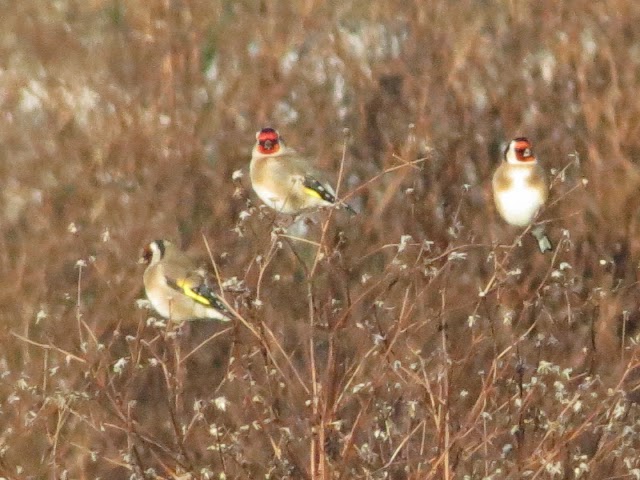
Goldfinches autumn 2014
Pukeko -dune lake May 5

Weeds have taken over in the wetland, but are seasonally late and only just coming into seed. These weeds aren’t all bad news because they attract honey bees, and provide feed for pukeko and then the exotic goldfinches though the flock of these birds is about a third the size of last year.

The special quality of a dune lake comes from its seasonal character so in its original state it would have hosted local native plants adapted to survive in difficult climactic conditions. These flora are not unlike that found in alpine regions – plants that are toughened to the conditions but that are also very beautiful. Development has expunged these plants, including raupo from this area though a new colony of rushes -wīwī- appears to be establishing in the centre of what will become the lake.

The first sign that the wetlands were returning was three weeks ago as we began to get persistent though not heavy autumn rain. The small wetland on the northern side of the Wharemauku was the first to return though cattle have been allowed to gather in this slough, and it has become fouled. It will clean up over time, though the effluent will seep as pollutant  into the Wharemauku. 
Current view of dune lake May 6 2013

The same vista in mid-June 2013
It will be 4-6 weeks before we see our wetland birds returning, and in the meantime this summer vegetation will begin to decay. The smell is ‘noticeable’ but not offensive, (at least to us). This is one of the few living swamps still surviving in this region and here lies the reason why. At this time of the year it looks messy and smells the same, yet this is a necessary part of the cycle of brew up a food supply for these wild native birds. As pakeha have settled here they have ‘cleaned’ these areas up by gentrifying them.

What remains astonishing is that this area is attracting so many species some of which are rare and endangered, right into the middle of town. Here is an attraction ready made for visitors and eco-tourism, and yet a year from now the entire area will be bulldozed. 

Track we were listening to while posting this Jimi Hendrix
If 6 was 9

Go ahead on Mr. Business man, 
you can't dress like me.
Sing on Brother, 
play on drummer.